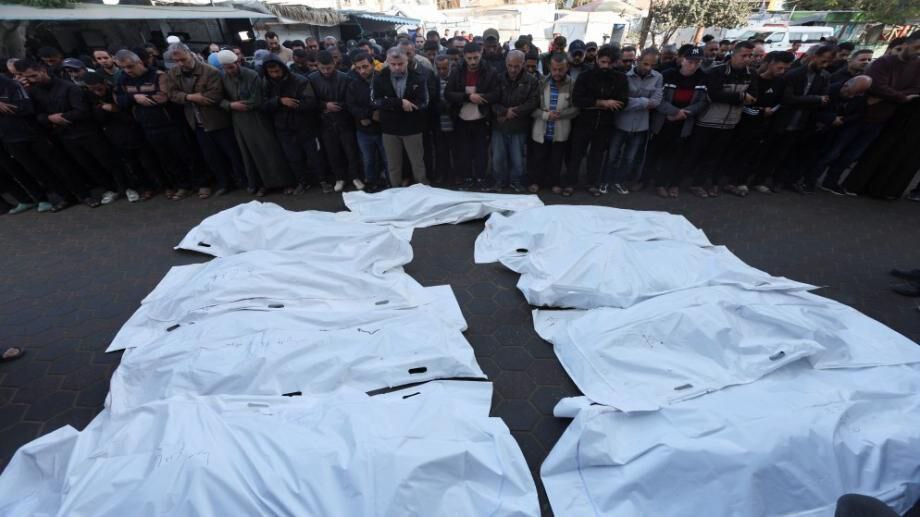

Gaza is not a “conflict zone.” It is not a “disputed territory.” It is a concentration camp—2.3 million people enclosed in 365 square kilometers, surrounded by walls, fences, and armed checkpoints, with no ability to leave, no ability to import or export freely, and no ability to build a functioning economy.
The UN has called it “unliveable.” Human rights organizations have called it an “open-air prison.” The ICJ has ruled that the occupation is unlawful.
But the word “prison” is not strong enough. A prison has guards, walls, and rules. Gaza has all of those—plus periodic bombings, starvation as a method of warfare, and the systematic destruction of civilian infrastructure.
It is not a prison. It is a death camp in slow motion.
The Prisoners
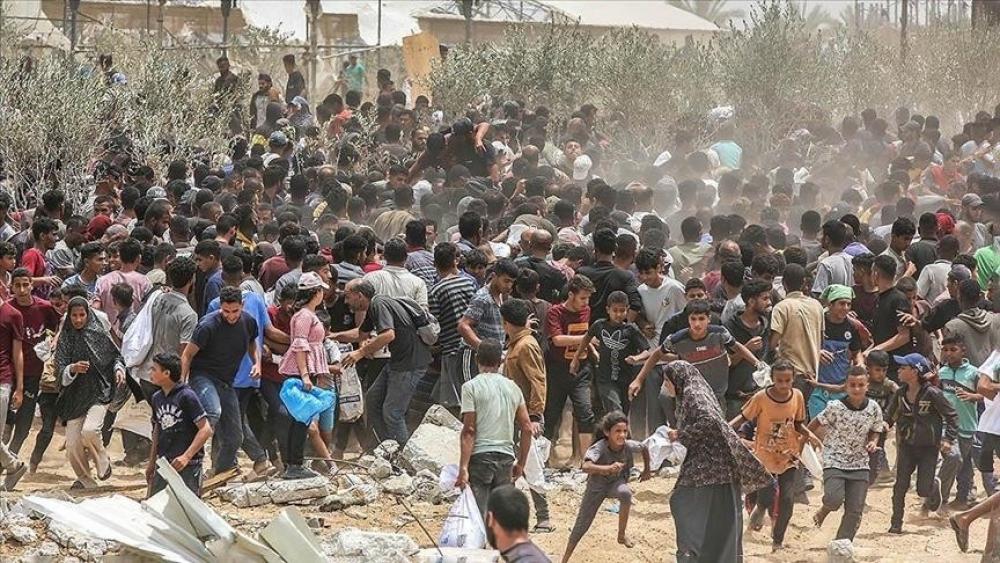
The people of Gaza are not “civilians caught in the crossfire.” They are captives. They are held captive by a state that controls their borders, their airspace, their water, their food, their electricity, their medical supplies, and their ability to rebuild.
Gazans are not “terrorists.” They are not “human shields.” They are parents, children, doctors, teachers, engineers, farmers, fishermen, and students. They are people who want to live, to work, to raise their families, to see the sun without fear of a drone strike.
And they have been subjected to:
- Blockade: Since 2007, Israel has controlled what enters and leaves Gaza. Food, medicine, building materials—all subject to a “dual-use” list that prohibits anything that could be used for military purposes. Which is everything.
- Starvation: The ICC has issued arrest warrants for Israeli leaders on allegations of starvation as a method of warfare. The UN has documented widespread hunger. Children are dying of malnutrition.
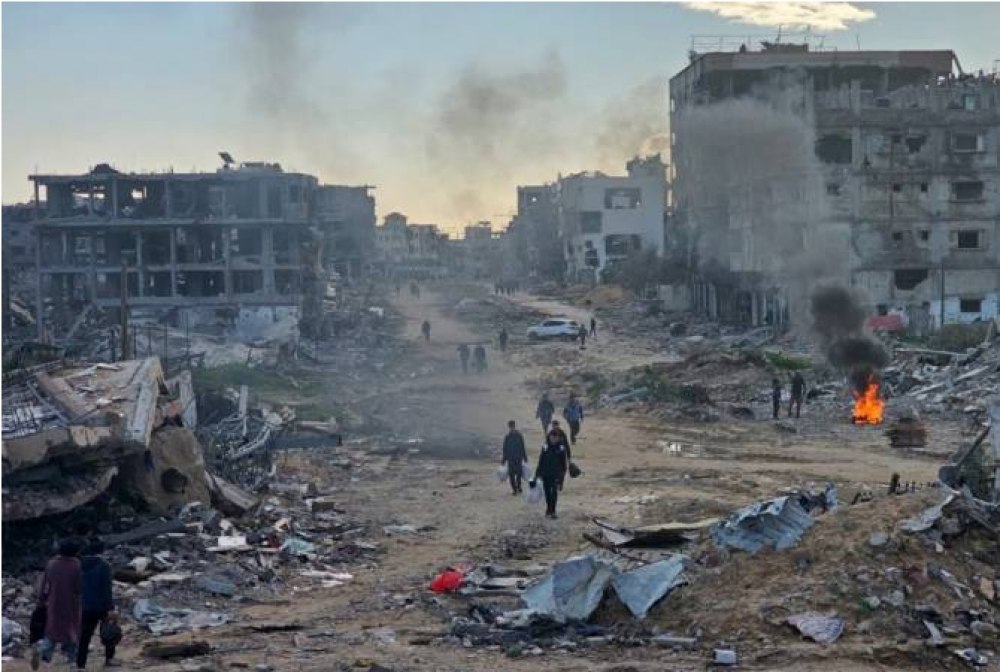
- Bombing: Residential buildings, hospitals, schools, universities, mosques, churches, UN shelters—all have been destroyed. The IDF has bombed ambulances, aid convoys, and journalists.
- Collective Punishment: The entire population is punished for the actions of a few. This is not just a violation of the Geneva Conventions; it is the definition of a war crime.
- Displacement: Over 90% of Gaza’s population has been displaced. Many have been displaced multiple times. They live in tents, in rubble, in the open air.
And yet, they do not “storm the castle.”
The Ethics of Islam
The people of Gaza have every reason to hate. They have lost their homes, their families, their futures. They have been subjected to violence that would make any population rise up in fury.
And yet, they do not. Not because they are weak. Not because they are afraid. But because their faith—and their humanity—tells them that there is a line they will not cross.
- The Islamic ethic of restraint: The Quran commands believers to “fight in the way of God those who fight you, but do not transgress. Indeed, God does not like transgressors.” (2:190) This is not a license for unlimited violence; it is a restriction on it.
- The prophetic example: The Prophet Muhammad (pbuh) is recorded as having forbidden the killing of women, children, the elderly, and non-combatants. He forbade the destruction of crops, trees, and livestock. He commanded that prisoners be treated with dignity.
- The moral conscience: Despite the horrors they have endured, many Palestinians continue to distinguish between civilians and combatants, between the occupation and the occupier, between justice and revenge.
This is not a justification for the violence that has been committed against them. It is an acknowledgment that the restraint they have shown is not a sign of weakness—it is a sign of moral strength.
What Restraint Means
Restraint does not mean passivity. It does not mean acceptance. It means choosing not to become what you hate.
The people of Gaza have been subjected to the worst that humanity has to offer—bombing, starvation, displacement, dehumanization. And yet, they have not become the thing that has been done to them.
They have not:
- Bombed Israeli hospitals.
- Starved Israeli children.
- Taken Israeli civilians as hostages
- Used collective punishment against Israeli civilians.
This is not a defense of all actions taken by Palestinian resistance groups. It is an acknowledgment that the restraint is asymmetrical. One side has F-35s and a nuclear arsenal; the other side has homemade rockets and a moral code that prevents them from using the one weapon they have in abundance: the willingness to become monsters.
The Psychological Burden
There is a psychological cost to this restraint.
Every day, the people of Gaza watch their children die. Every day, they watch their homes destroyed. Every day, they watch the world look away.
The cognitive dissonance is crushing. The injustice is unbearable. And yet, they do not storm the castle.
The Role of the World
The world has a choice.
- It can continue to enable the occupation, providing weapons, diplomatic cover, and economic support to the state that is committing the atrocities.
- Or it can act to end the occupation, enforce international law, and give the people of Gaza a reason to believe that justice is possible.
If the world chooses the first option, it is choosing to test the limits of Palestinian restraint. And that is a dangerous gamble.
Because restraint is not infinite. It is not a given. It is a choice that is made every day, by people who have every reason to stop making it.
The world should not be betting on Palestinian restraint. The world should be working to restrain israel.